
At a glance
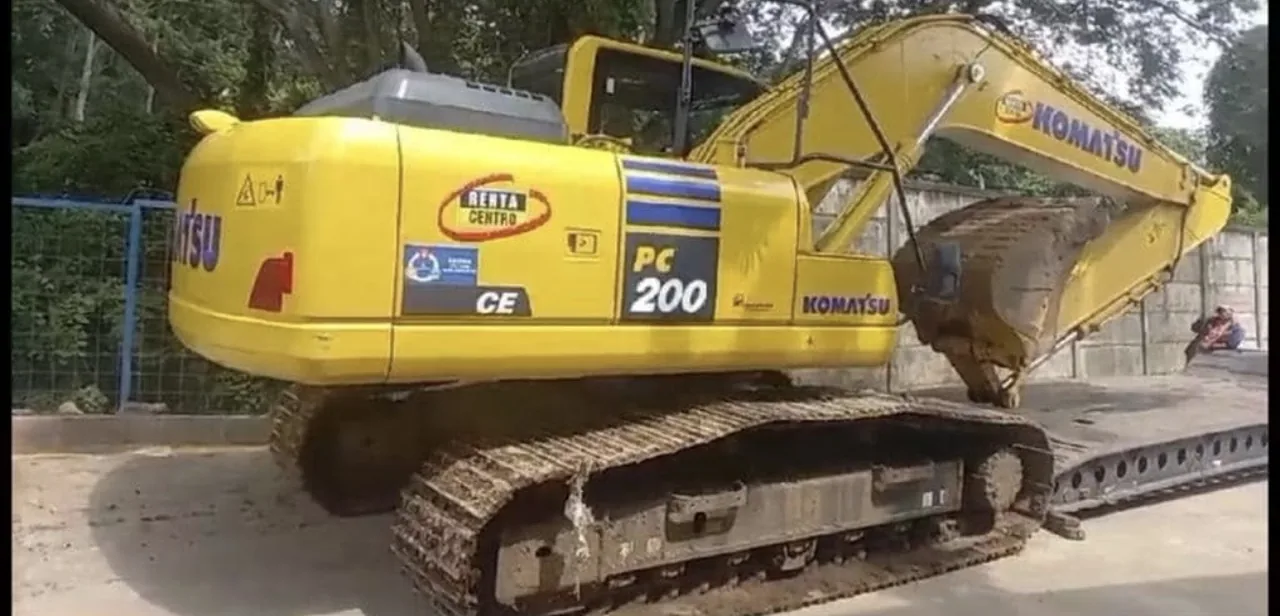
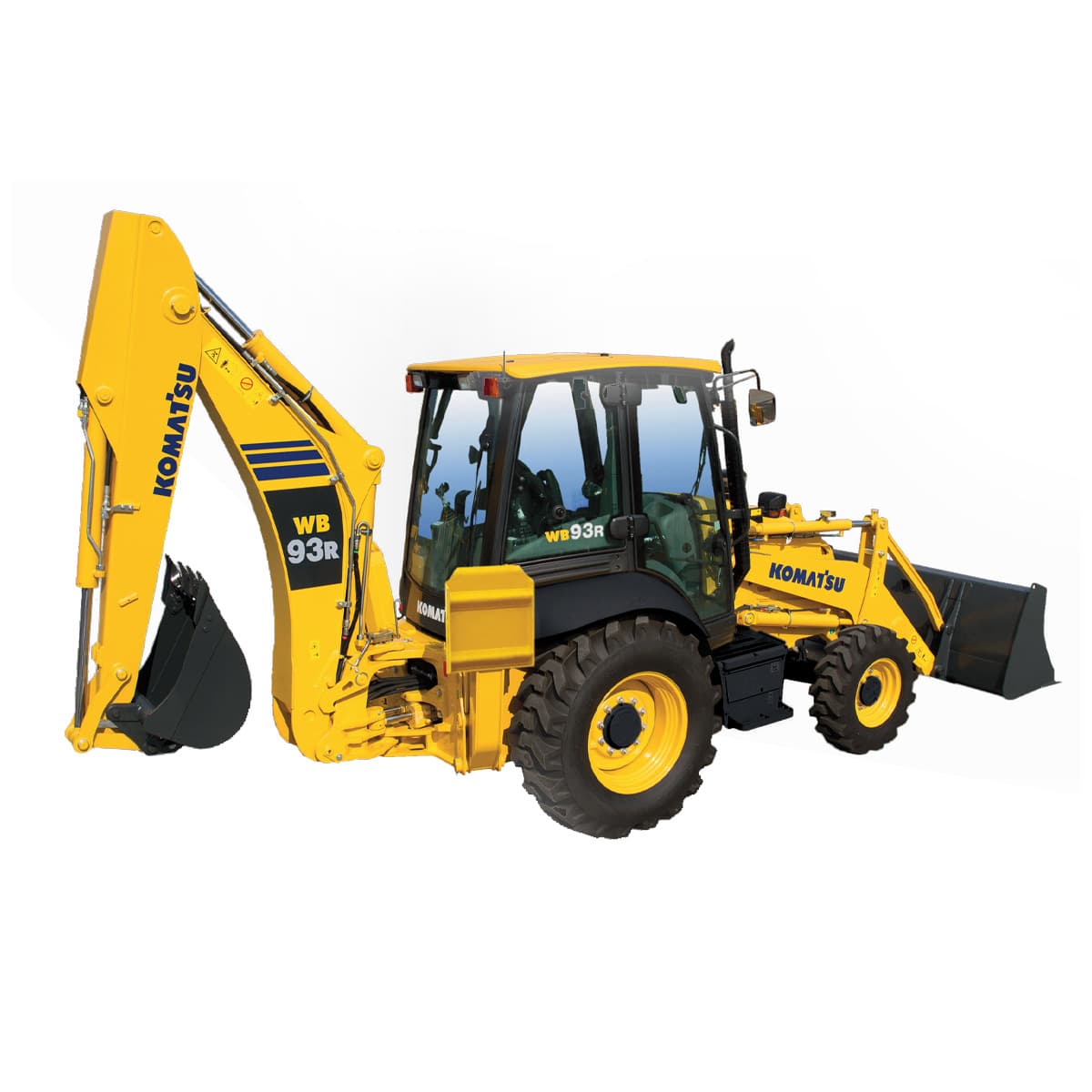
| Spec | 20 t Komatsu excavator | WB93R / B760 backhoe |
|---|---|---|
| Weight / power | 20.3 t · 138 HP | ~99–100 HP |
| Digging depth | ~6.5 m | ~5.7 m (extendable dipper) |
| Bucket | 1.0 m³ | ~1.0 m³ front + rear bucket |
| Undercarriage | Tracks | Wheels, 4×4 |
| Wins at | Volume, depth, truck loading | Dig + load + backfill in one shift |
When the excavator wins (Komatsu, 20 t)
Mass excavation, deep trenching and steady truck loading: the 20 t excavator digs to ~6.5 m, moves 1.0 m³ per pass and doesn't tire. If your job lives off digging — earthworks, collectors, large foundations — the excavator produces more cubic metres per day, and that pays its rate.
When the backhoe wins (WB93R / B760, 4×4)
Two machines in one rental: digs in the back (to ~5.7 m with extendable dipper) and loads in the front (~1.0 m³). If your job mixes medium trenching with material handling, backfill and cleanup — the typical utilities and housing case — the backhoe runs the whole cycle without renting two machines. And with 4×4 it moves itself between fronts.
The third option people forget
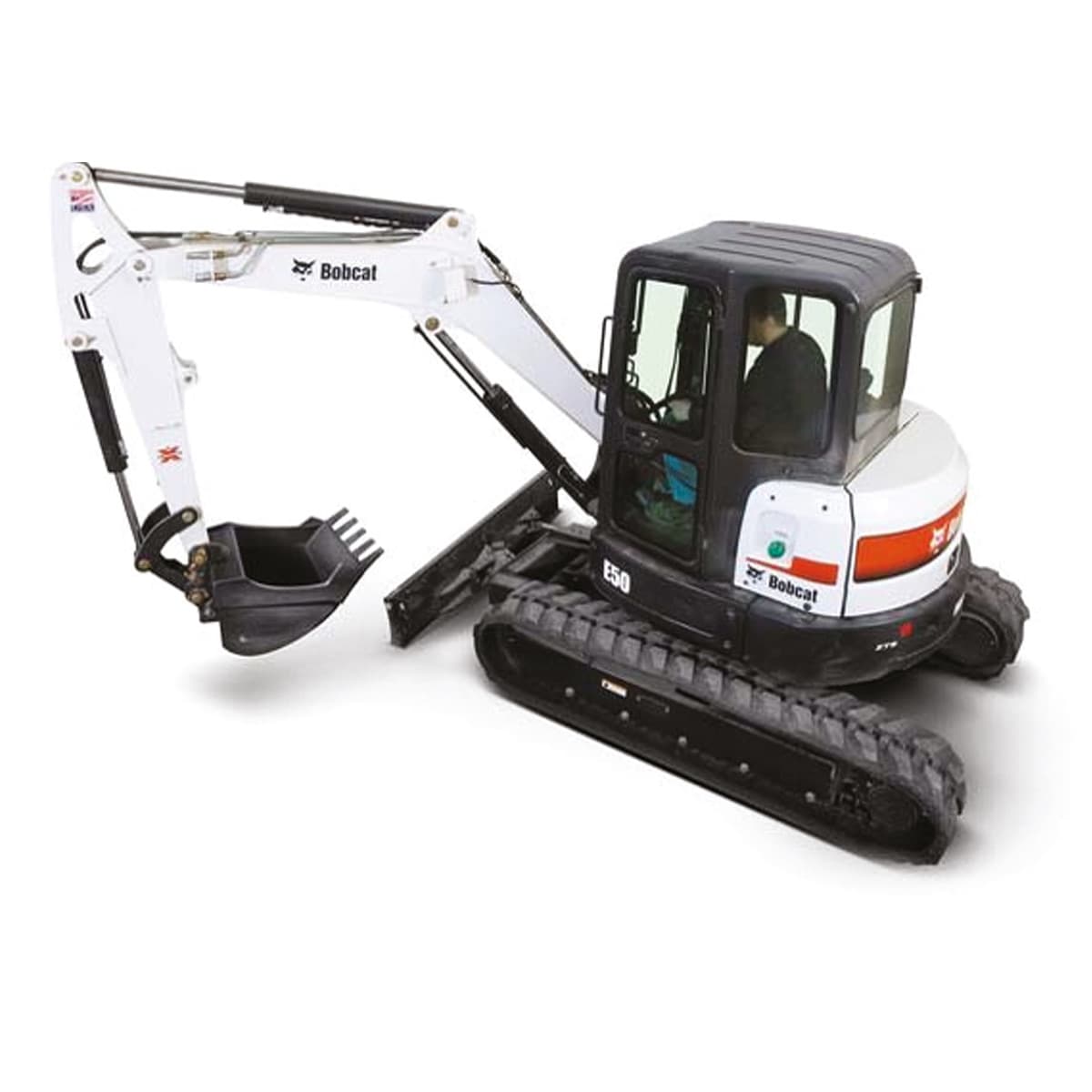
If the work is in tight space — yards, inside buildings, urban trenching next to utilities — the answer may be a mini excavator or skid-steer: they fit where the big ones can't, and rent lighter. The 5 t Bobcat E50z has zero tail swing and digs to ~3.5 m right against the wall. Tell us your real access width when quoting.
Cost per cubic metre, not per hour
As a general rule, the backhoe is a class below the 20-tonne excavator and its rate follows. But the number that matters is the cost of each cubic metre moved: in mass excavation, the excavator usually wins even at a higher rate, because it makes more passes per hour with a bigger bucket. On mixed jobs, the backhoe wins because it saves you a second machine and its freight.
Rock or slab to break?
Both take a hydraulic breaker: the fleet has a 20 t excavator configured with breaker hydraulics, and the breakers mount on the backhoe, with or without the rented backhoe. Ask for it in the same quote so it arrives with hydraulics and coupler ready.
What to give when quoting so you get the right machine
- Depth and width of the trench or cut.
- Approximate volume and whether trucks need loading.
- Type of ground: soil, rock or slab to break.
- Real access width and whether there are lines or utilities nearby.
- Days of digging and whether you want an operator.
Common mistakes
- Renting the 20 t excavator for a small trench in an urban space: it won't fit or won't pay off.
- Using a backhoe for mass excavation: it costs more per cubic metre.
- Not measuring the access width before quoting.
- Forgetting the breaker and asking later: it comes on another trip.
Frequently asked questions
Can I rent the excavator or backhoe with an operator?
Yes — both are available as operated rentals with a certified operator. It's the most requested option in excavation, where operator skill shows directly in progress.
Which rents cheaper?
As a general rule, the backhoe is a class below the 20-tonne excavator and its rate follows. But the number that matters is cost per cubic metre moved: in mass excavation, the excavator usually wins even at a higher rate.
Which one digs deeper?
The 20 t Komatsu excavator: to ~6.5 m. The 4×4 backhoe reaches ~5.7 m with its extendable dipper, and the E50z mini excavator ~3.5 m.
What works best in a tight space?
A zero-tail-swing mini excavator (Bobcat E50z), which digs right against the wall, or a Bobcat skid steer for loading and cleanup. Tell us the access width when you quote.
How does the machine get to my site?
We coordinate transport with delivery: lowboy mobilization, safe lifting and a documented inspection on arrival. Freight is quoted by distance and access.
Equipment in this guide
Add them to your quote with the + button and send them together, with dates, in a single request.
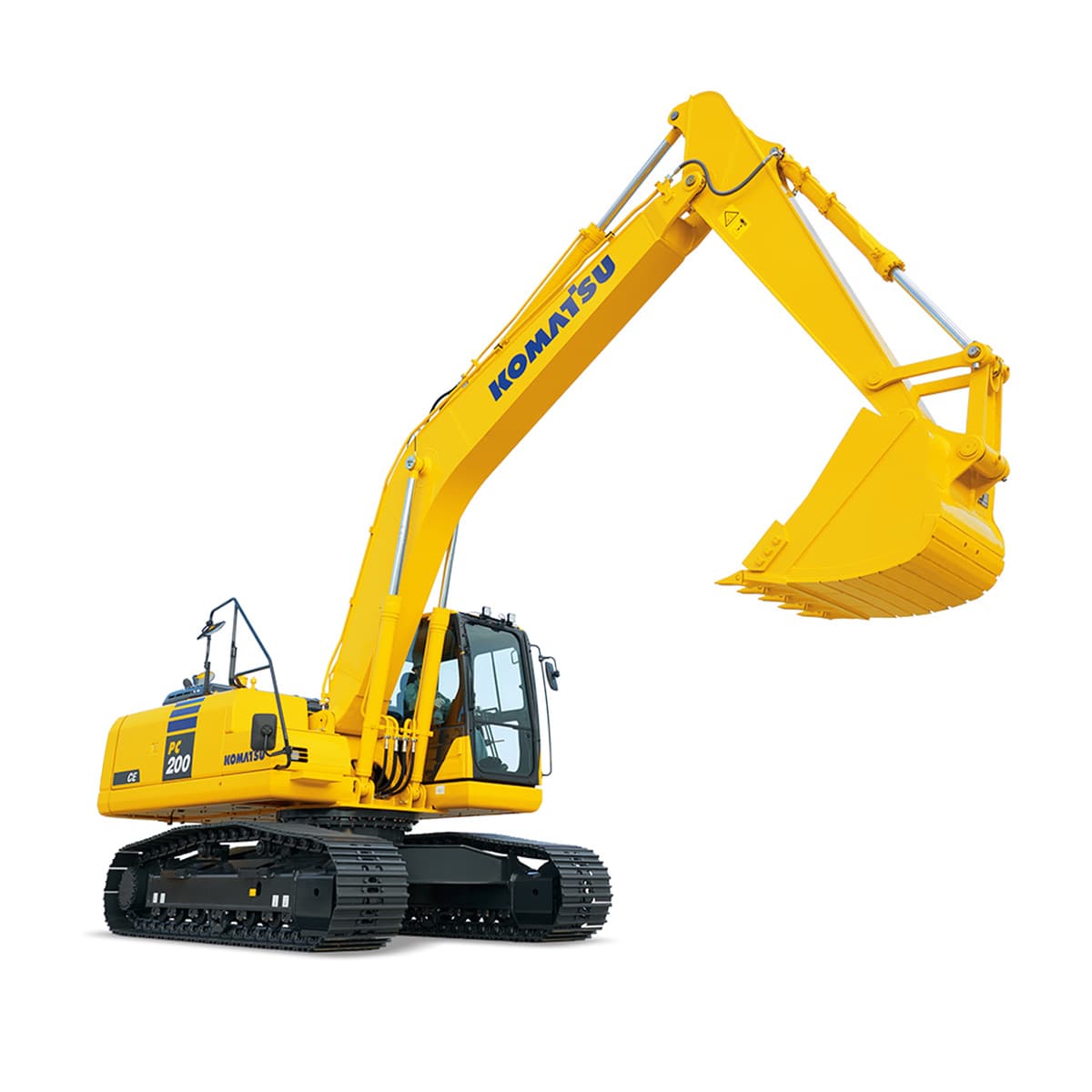 Komatsu PC200-10M0 CE Excavator
The 20-tonne excavator that carries the heavy stage of the job.
Get a quote- Komatsu WB93R-5E0 Backhoe Loader
Digs in the back, loads in the front: two machines in one rental.
Get a quote 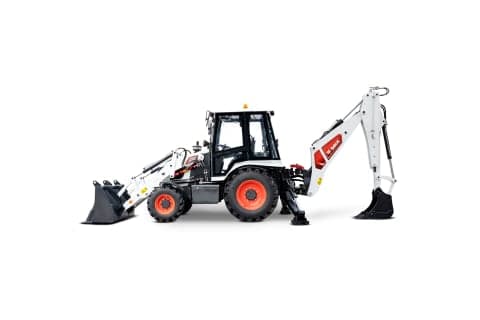 Bobcat B760 Backhoe Loader
4×4 backhoe with extendable dipper for deep trench and agile loading.
Get a quote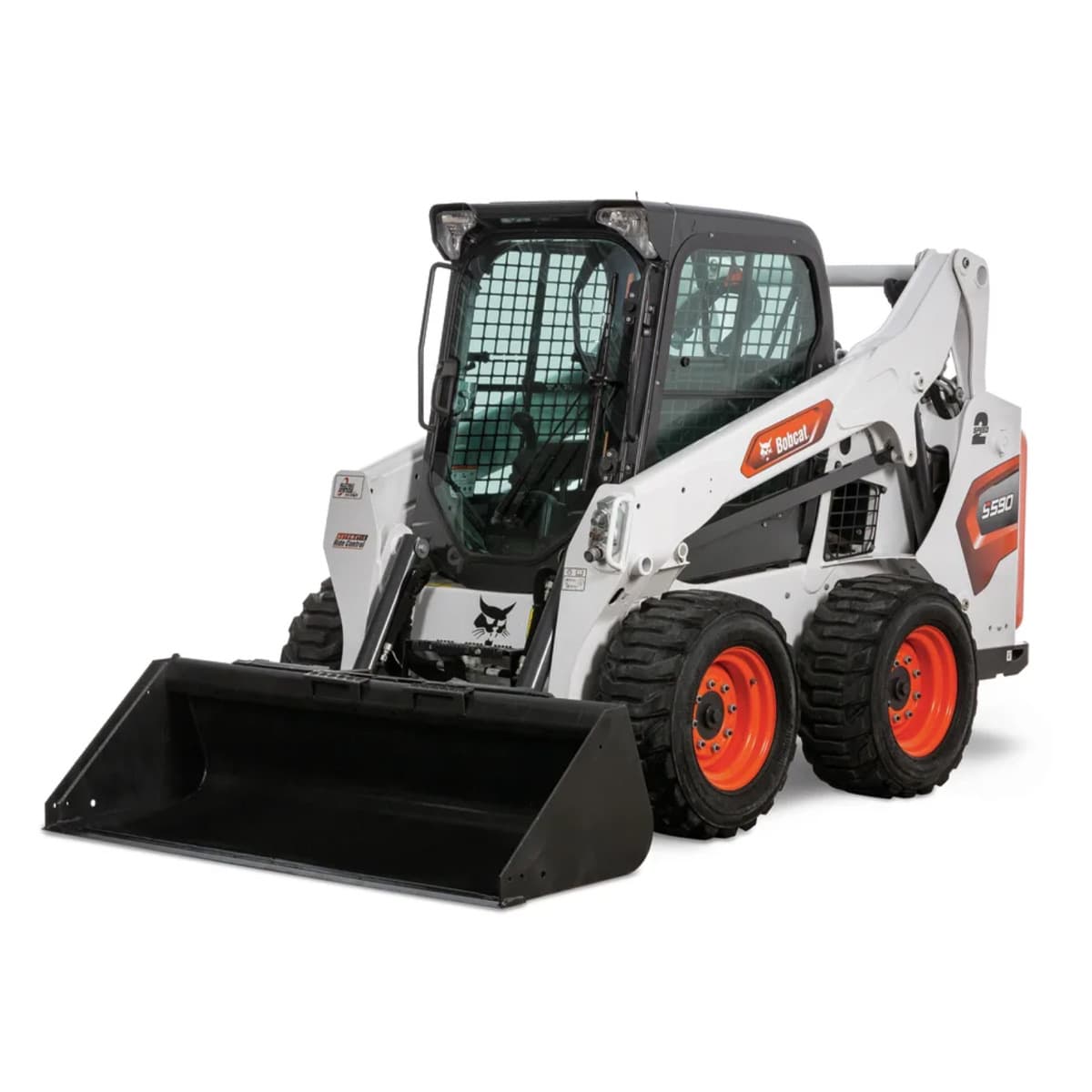
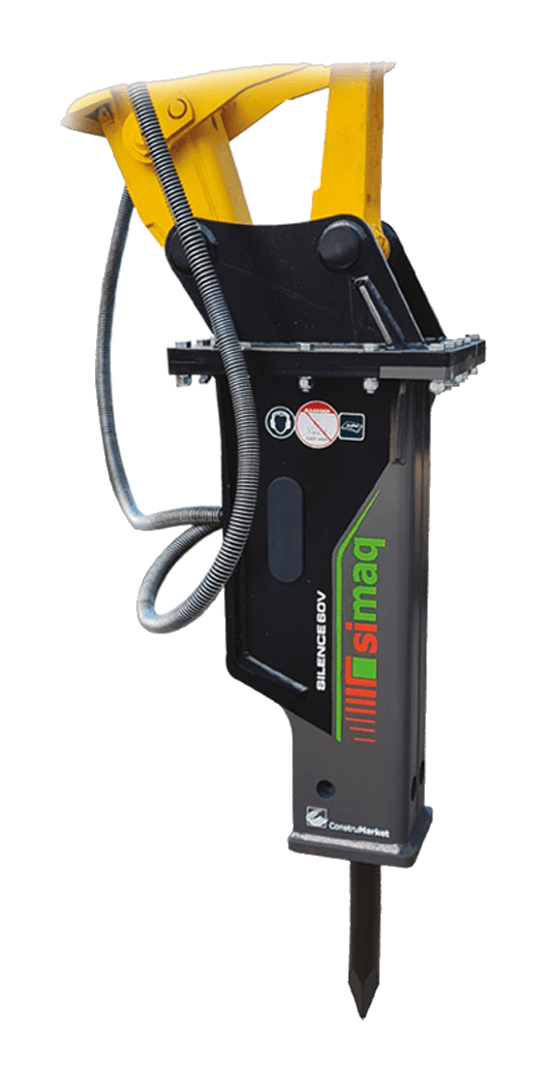 SIMAQ DB 60V Hydraulic Breaker for Backhoe
Breaks concrete and rock mounted on the backhoe — without buying the attachment.
Get a quote