At a glance
| Material | Compacts by | Machine |
|---|---|---|
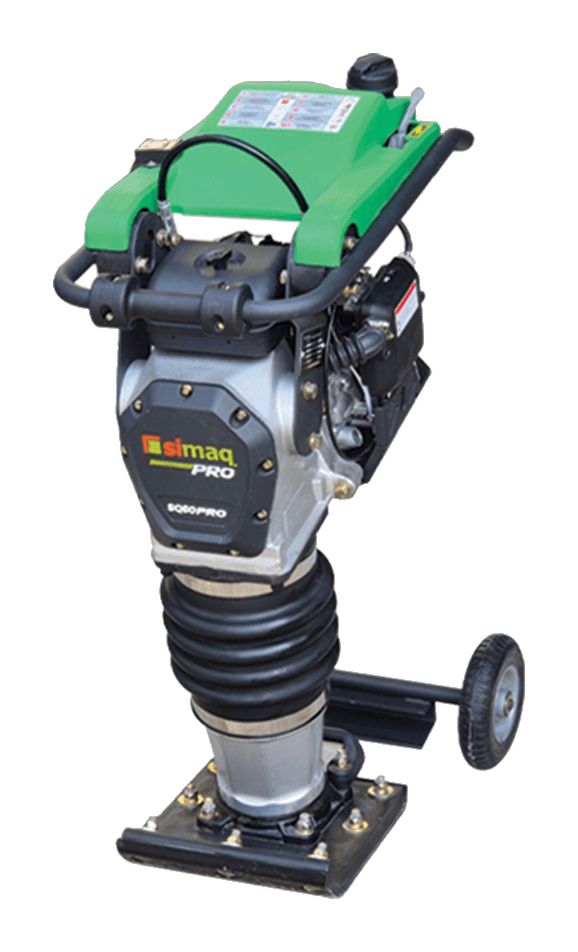
| Clay or silt | Impact, in thin layers | SQ60 PRO rammer |
| Trench or next to pipe | Impact | SQ60 PRO rammer |
| Sand, gravel or base | Vibration | 1.5 t ride-on or 4.2 t tandem |
| Asphalt: patching | Smooth drum | 0.8 t walk-behind |
| Asphalt: road mat | Smooth drum | 4.2 t tandem |
First: what material are you compacting?
- Cohesive (clay, silt): fine particles that stick together. They compact by kneading and impact, in thin layers.
- Granular (sand, gravel, select fill, base): loose particles that settle with vibration.
- Mixed: most real-world fills. Go by whichever fraction governs how it behaves; if there's a lab on the job, let the lab decide.
Soil → equipment, in one list
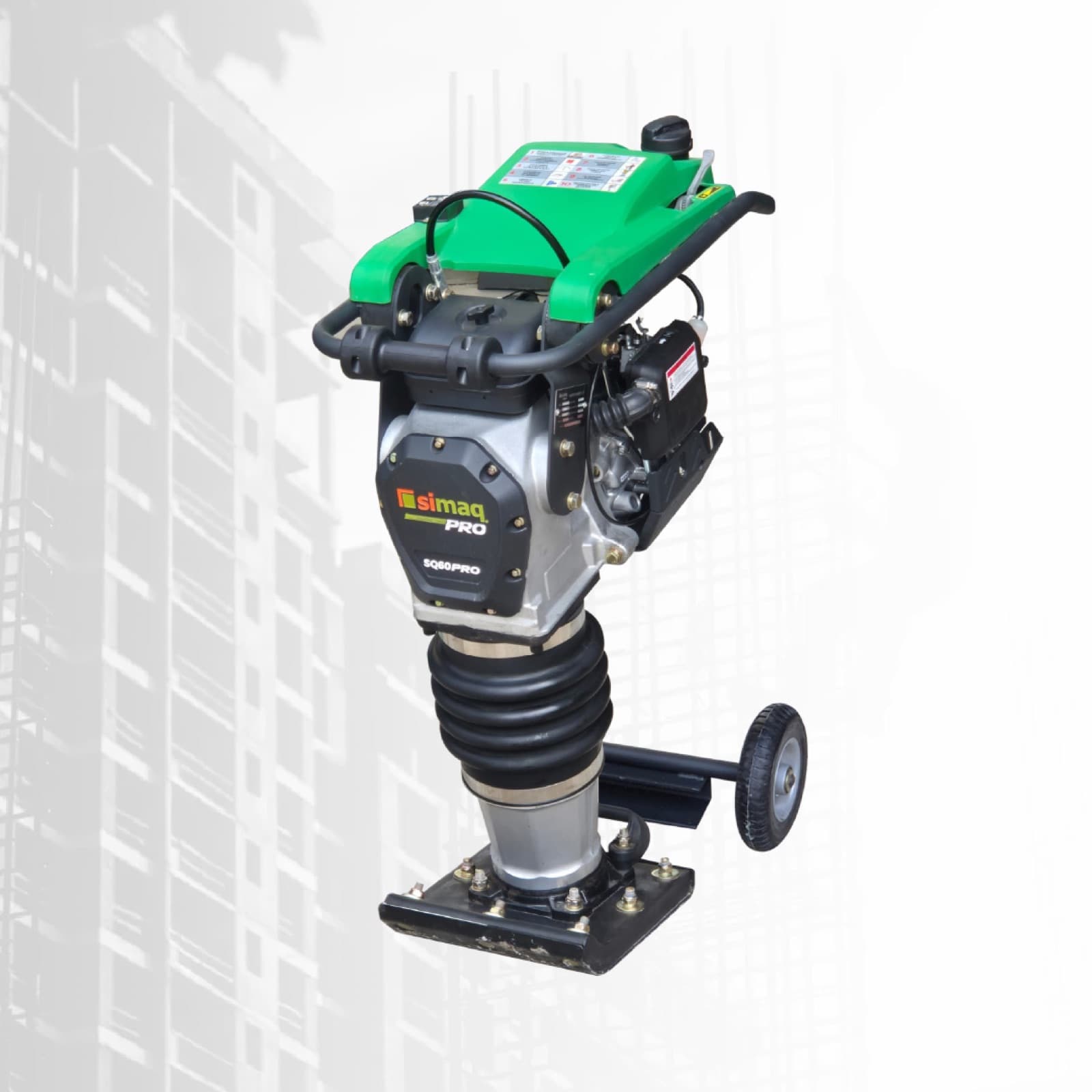
- Clay or silt in a trench, next to pipe or in confined backfill → SIMAQ SQ60 PRO rammer: 13.7 kN impact, 680 blows per minute, 34 × 29 cm shoe.
- Footing edges, around manholes, columns and boxes → rammer.
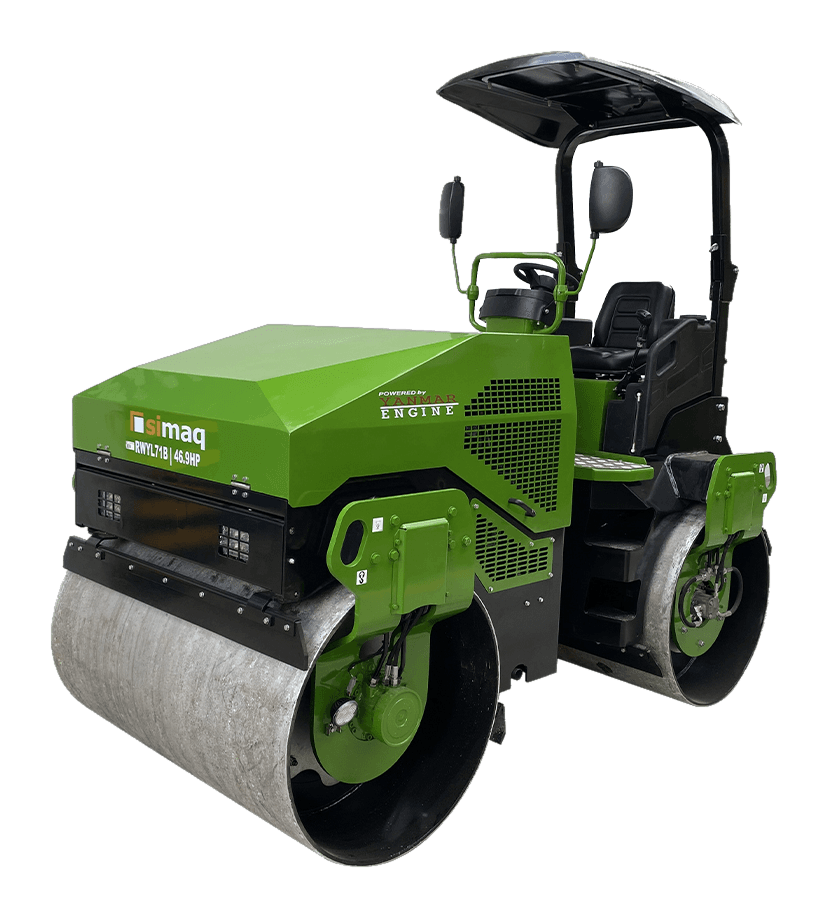
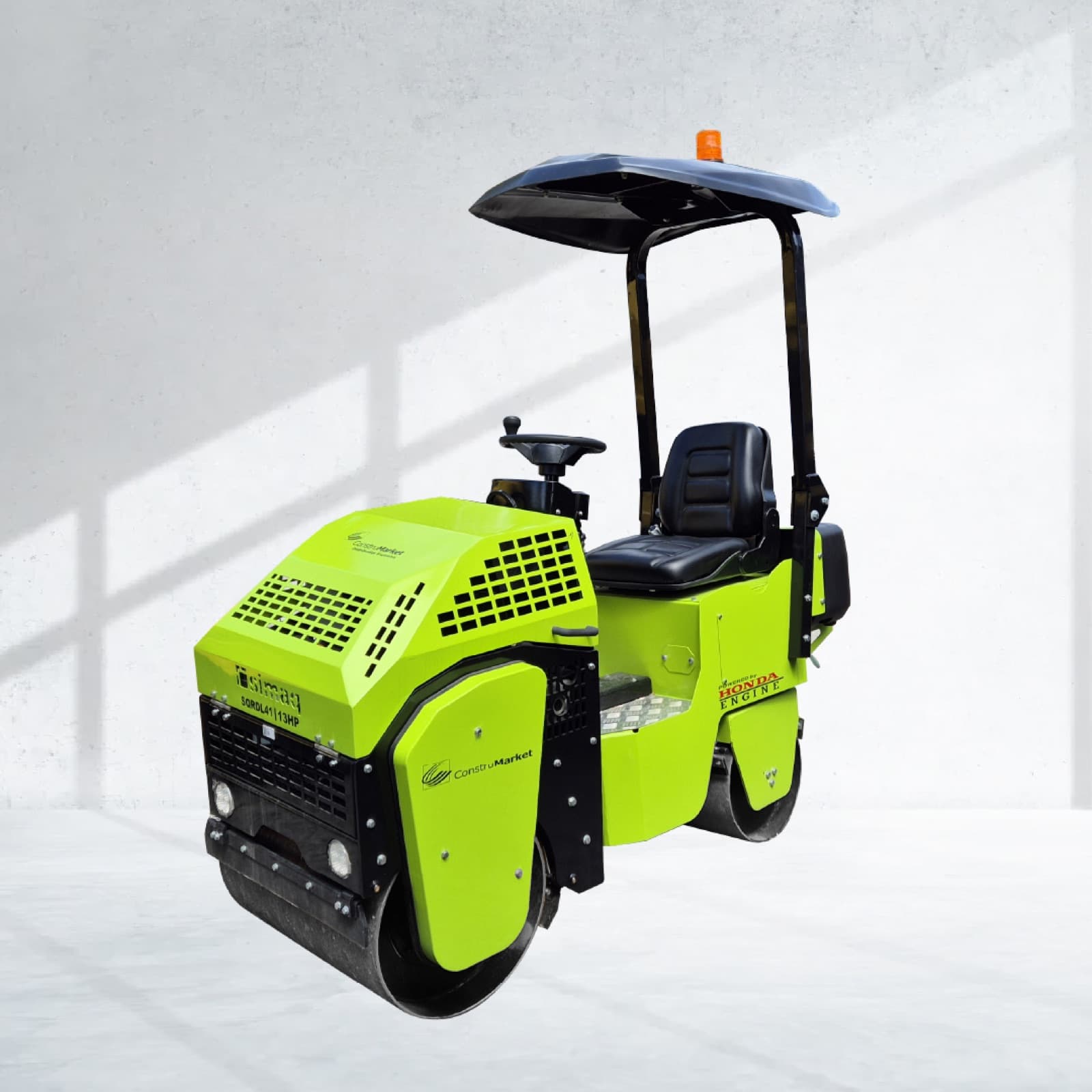
- Sand, gravel, select fill or granular base in open areas → vibratory roller: 1.5 t ride-on for mid-size areas, 4.2 t tandem on roads.
- Sidewalk, ramp or small-yard base → 0.8 t walk-behind double drum.
- Asphalt: patching → 0.8 t walk-behind; road mat → 4.2 t tandem.
- Clay over a large area → raise it with your engineer when you quote: a smooth drum is less effective on plastic clays.
 Reference image
Moisture: the factor you can't rent
Bone-dry soil won't compact — the particles don't settle — and soaked soil turns to mud that 'pumps' under the machine. Every material has an optimum moisture content for compaction, which the lab sets with a Proctor test. On site, the quick check is the fist test: if a squeezed handful crumbles to dust, it needs water; if it oozes or smears, it has too much. Fix the moisture before blaming the machine.
Layers: the thickness the spec calls for
No machine compacts an overly thick layer well: the top ends up hard and the bottom stays loose. Spread and compact in layers of the thickness your project spec sets and, if there's quality control, let the lab verify each layer before covering it. Light machines need thinner layers than heavy ones: that's why the rammer and walk-behind roller work thinner lifts than the tandem.
Build the compaction package
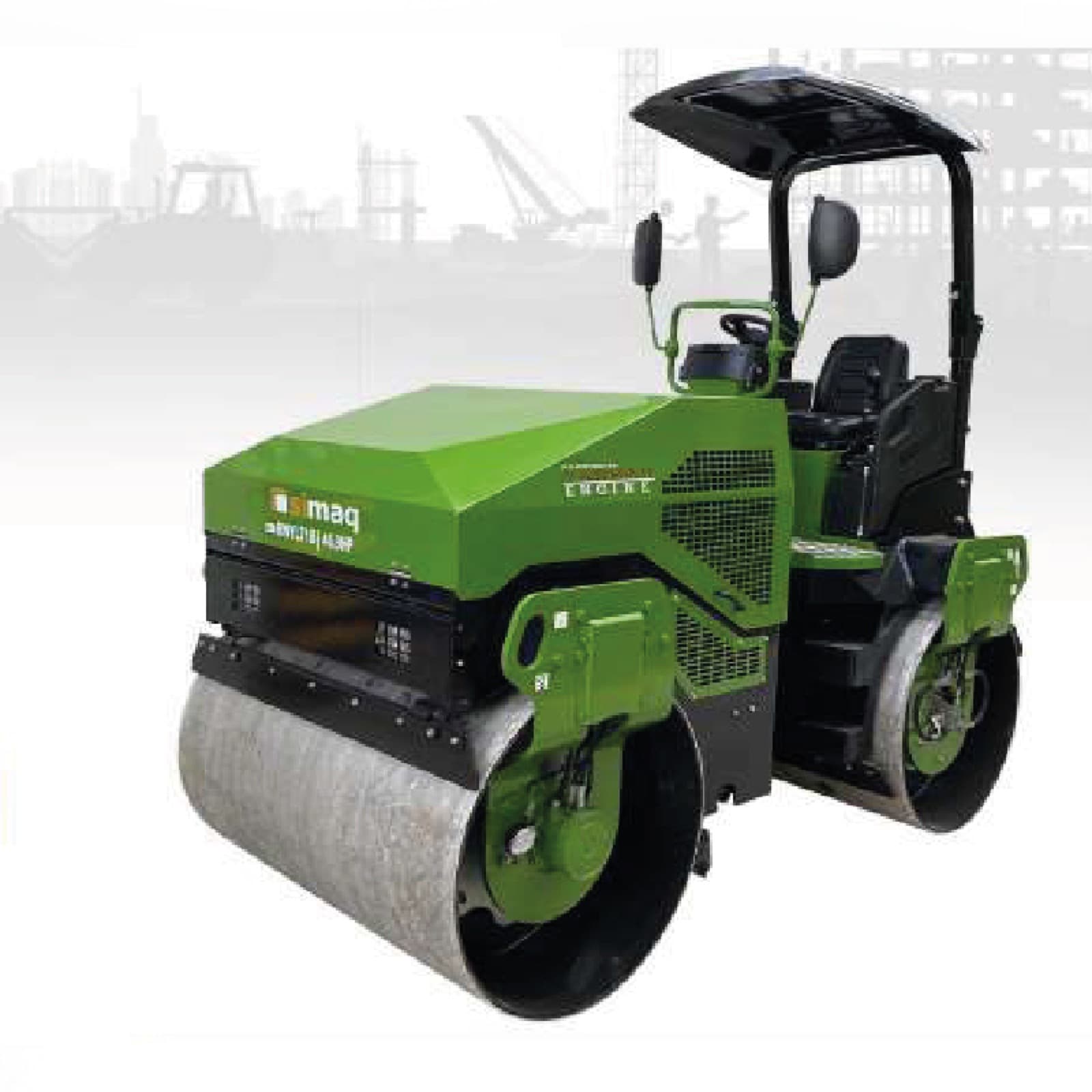
Most jobs use two machines: one for trenches and edges (rammer) and one for open areas (roller). Add them to your quote together from the equipment pages and request them with each stage's dates. The SQ60 PRO rammer is the most-stocked machine in the entire fleet (29 units), and maintenance on either one is on us.
Common mistakes
- Putting a roller in a narrow trench: it doesn't fit or misses the edges.
- Relying on vibration alone for clay: it needs impact and thin layers.
- Compacting saturated soil right after rain.
- Making a single pass and calling the layer done.
- Forgetting the edges: where the roller can't reach, the rammer finishes.
Frequently asked questions
What compacts clay best?
Impact: the rammer (jumping jack) pounds and kneads fine soil in thin layers. Vibration alone works better on granular materials.
What do I use to compact sand or gravel?
A vibratory machine: the 1.5 t ride-on roller for mid-size areas; the 4.2 t tandem on roads; the 0.8 t walk-behind double drum in tight spaces.
How do I know the soil has the right moisture?
The optimum moisture is set by the lab with a Proctor test. On site, squeeze a handful: if it crumbles to dust it needs water; if it oozes or smears, it has too much.
What do I use to compact next to a pipe?
The rammer: it compacts at trench width and next to the pipe without damaging it. Follow the spec for the thickness of the first layers over the pipe.
How many passes do I need?
As many as the spec requires to reach the compaction the lab verifies. A single pass is almost never enough, and on thick layers no number of passes will do.
Equipment in this guide
Add them to your quote with the + button and send them together, with dates, in a single request.
 SIMAQ SQRDWB L34 Double-Drum Roller (0.8 t)
Walk-behind double vibrating drum for base and asphalt.
Get a quote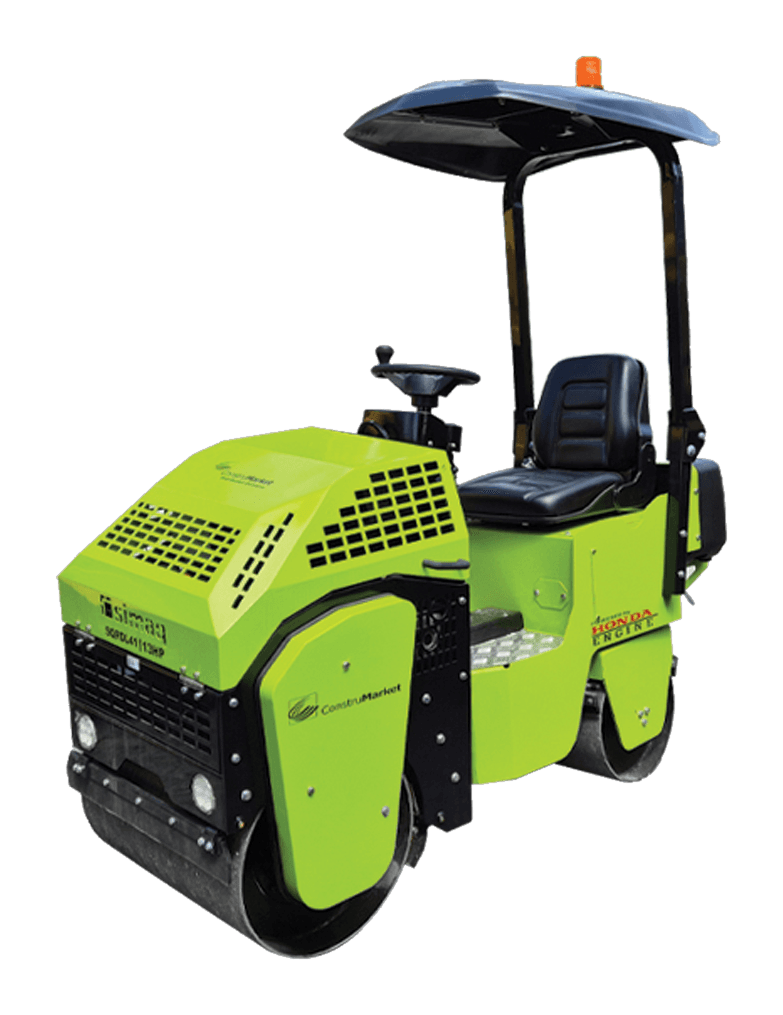 SIMAQ SQRD L51 Ride-On Roller (1.5 t)
Ride-on compaction for embankment and minor roadwork.
Get a quote