At a glance
| Phase | Fleet equipment | What to say when you quote |
|---|---|---|
| Cut and load | Komatsu PC200-10M0 CE excavator | Approximate volume, cutting days, lowboy access |
| Move and spread | 4×4 backhoe · Bobcat skid steer | Area size and obstacles |
| Compact open areas | 1.5 t ride-on · 4.2 t tandem | Surface area and number of lifts |
| Compact edges | SQ60 PRO rammer | How many fronts at once |
| Final cleanup | Skid steer | Ground handover date |
What earthworks is and what this guide covers
It's the work that leaves the ground ready for what goes on top: a pad for warehouses or homes, a street's subgrade, a parking lot. You cut where there's too much, fill where there's too little and compact every fill lift so it doesn't settle later. Volumes and grades are set by the project; equipment is chosen by phase.
The published rental fleet doesn't include track dozers or motor graders. This guide covers the earthworks you can do with an excavator, backhoe, skid steer and compaction equipment — which is most urban, industrial and housing projects.
Cutting and loading: the excavator
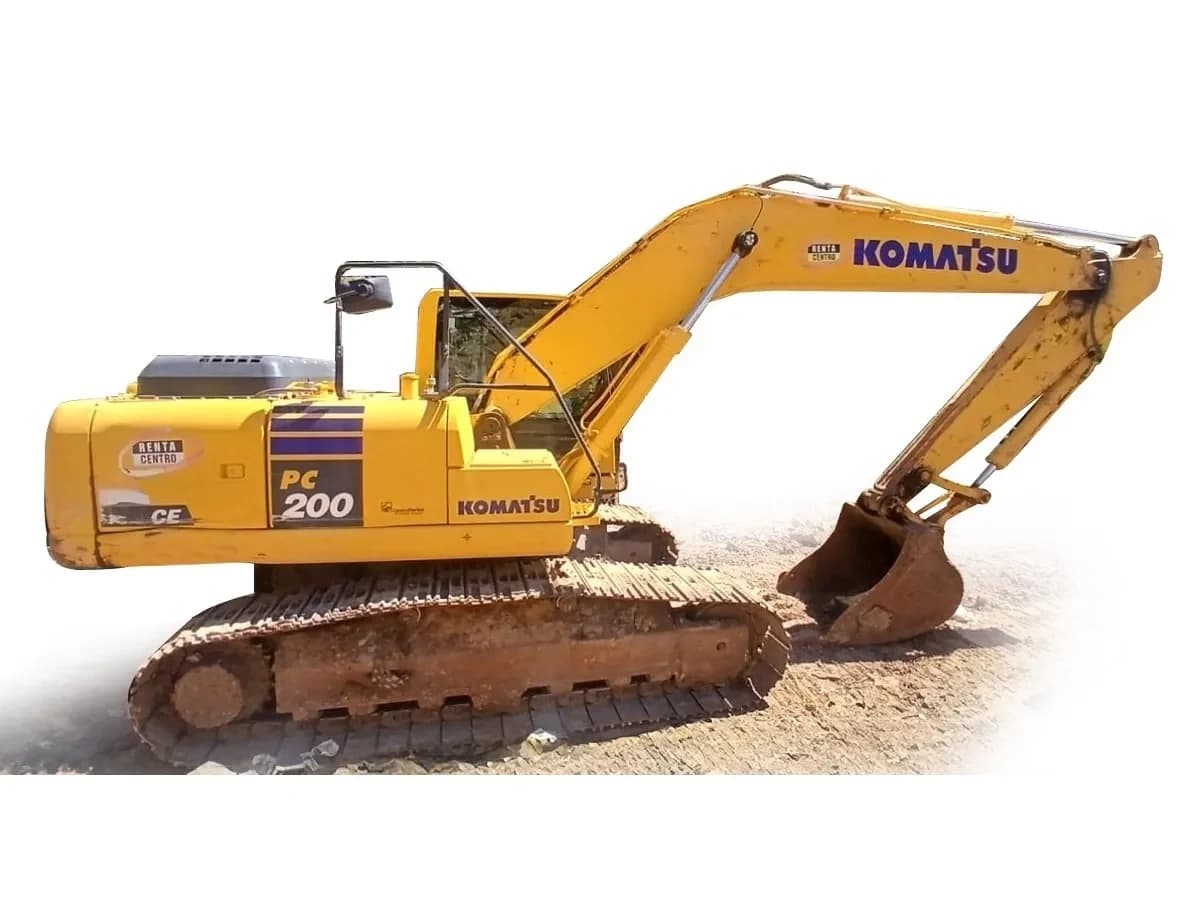
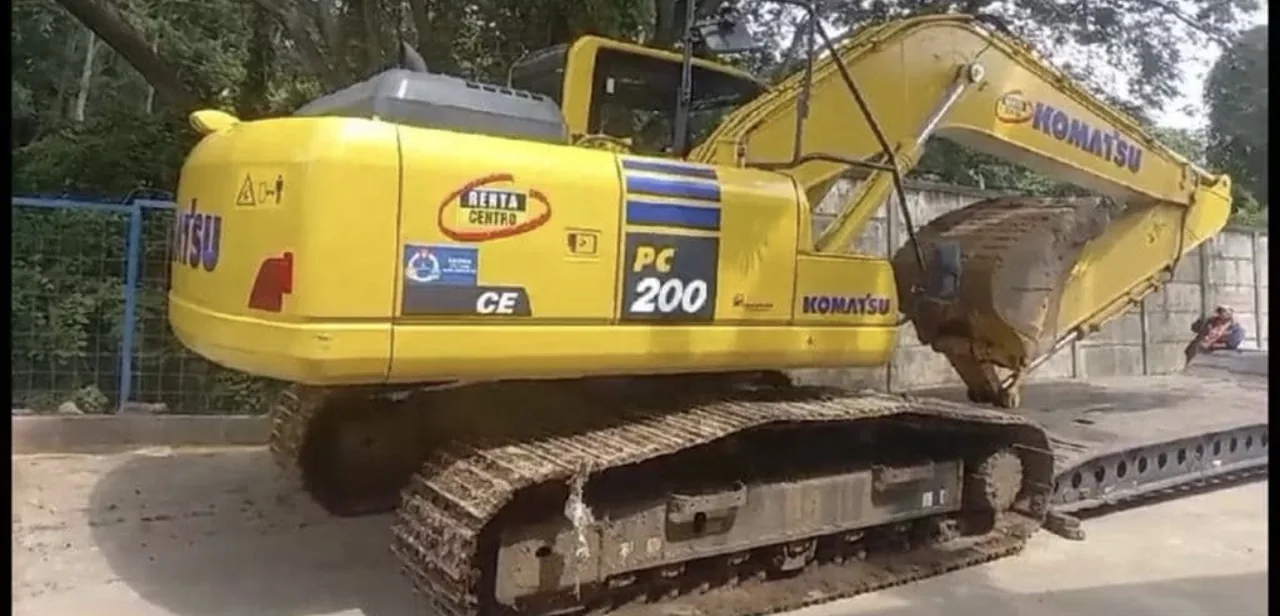
In the cut, the Komatsu PC200-10M0 CE excavator sets the pace: 20.3 t operating weight, 138 net HP and a 1.0 m³ bucket. It cuts the ground, shapes slopes and loads haul trucks from the same spot, without a second machine. Fleet units carry hour monitoring and up-to-date Komatsu maintenance. Size the rental to the actual cutting days: when it's over, the excavator should leave.
Moving and spreading material: backhoe and skid steer
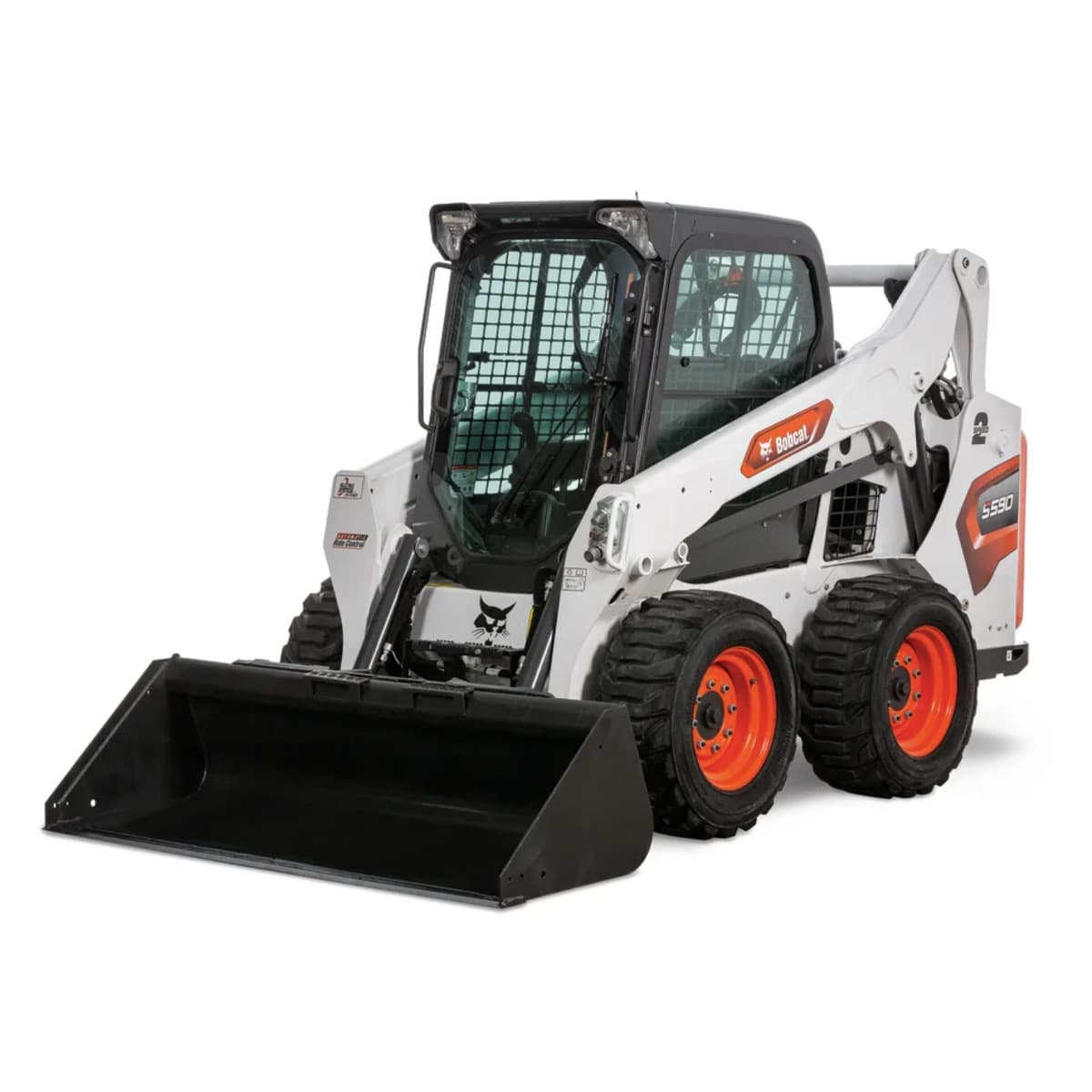
In small areas, material is moved and spread with the backhoe — a front bucket of around 1.0 m³ on the Komatsu WB93R-5E0 — or with the skid steer. The Bobcat S590 lifts around 998 kg on a vertical arm; the compact S18 fits where the site gets tight. Neither replaces the excavator on a large cut, but both finish what it can't reach and clean up the front at the end.
Filling in lifts
- Each lift's thickness, the material and the required compaction are set by the project or your soils lab: get them before you start.
- Spread even lifts: a lift that's thick in one spot and thin in another ends up with uneven density.
- Compact each lift before placing the next; what's left loose below can't be fixed from above.
- Watch the material's moisture as the project specifies: too dry or too wet doesn't compact the same.
Compacting: which equipment for which zone
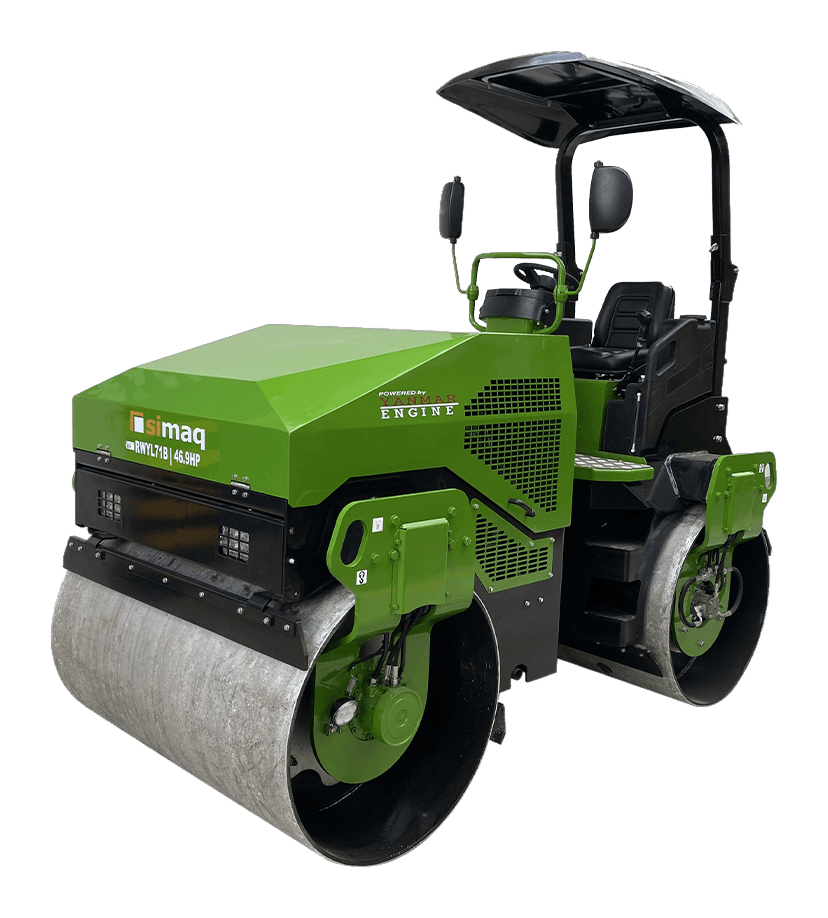
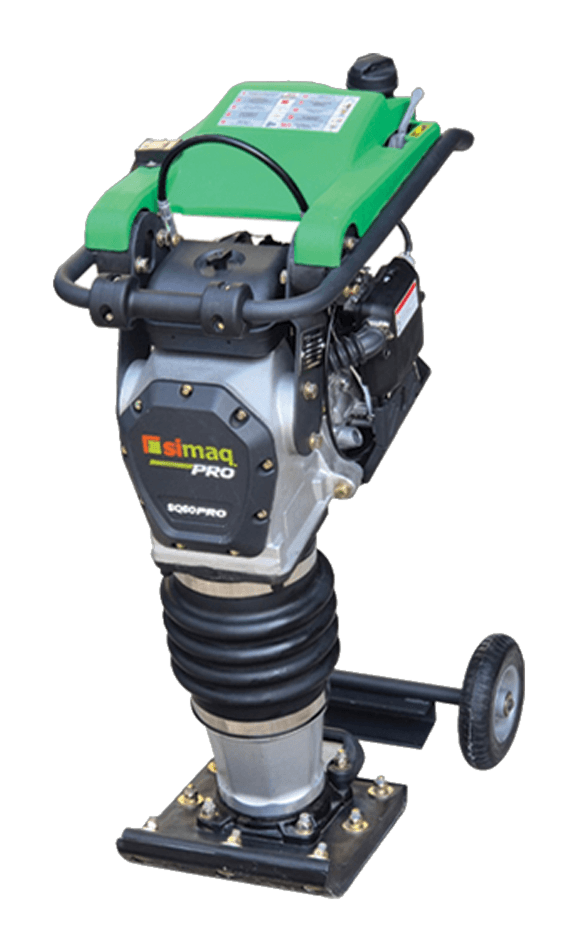
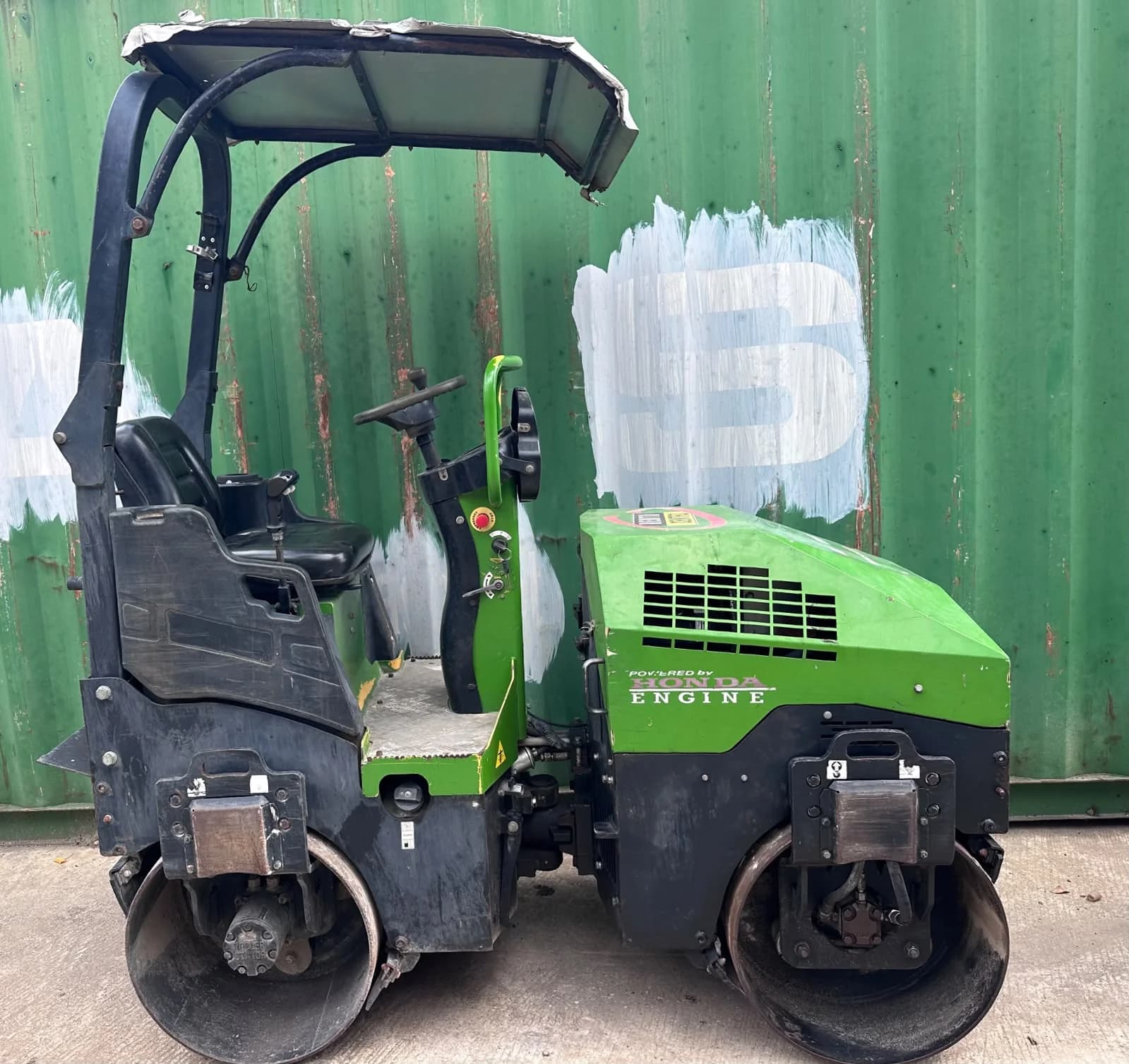
In open areas — embankments, parking lots, minor roads — the 1.5 t SIMAQ ride-on roller, with a smooth vibrating drum, moves with the operator aboard and outpaces a walk-behind. For road base and large areas, the 4.2 t SIMAQ tandem: double vibrating drum, 40 kN centrifugal force on both drums, up to 12 km/h and 40% gradeability. At edges, next to walls and in corners where the roller can't go, the SQ60 PRO rammer. For patching and sidewalks, the 0.8 t walk-behind roller.
The rental fleet has no padfoot roller. If your fill is clayey, check the compaction-by-soil guide before choosing.
Chaining the rental by phase
The expensive mistake is renting everything on day one. Put dates per machine: the excavator stays while the cut lasts; the roller and rammer arrive when filling starts; the skid steer comes for final cleanup. If the front works at night, add the light tower. If a machine will work for months on end, 6-to-24-month contracts carry preferred terms. And if you have no certified operator for a line, operated rental solves it.
Common mistakes
- Renting the whole fleet on day one and paying for idle rollers while the cut lasts.
- Filling in one thick lift and compacting only the top.
- Forgetting edges and corners: the roller can't get there and the rammer is needed.
- Not confirming lowboy access for the excavator.
- Starting without the lift thickness and compaction the project requires.
Frequently asked questions
What equipment do earthworks need?
A cut-and-load machine — the 20 t excavator — one to move and spread material — backhoe or skid steer — and compaction equipment: a roller for open areas and a rammer for edges. How many depends on volume and schedule.
Which roller do I use to compact fill?
On embankments, parking lots and minor roads, the 1.5 t ride-on roller. For road base and large areas, the 4.2 t tandem. Where the roller can't go, the rammer. The rental fleet has no padfoot roller.
Do you rent track dozers or motor graders?
They're not in the published rental fleet. Earthworks that can be done with an excavator, backhoe, skid steer and compaction, yes: tell us about the project when you quote and we'll put the spread together with what there is.
How long should I rent the excavator for the cut?
The actual cutting and loading days, not the whole job. If it's several weeks, compare weekly or monthly terms; if it's months, ask about 6-to-24-month contracts.
Can I rent with an operator?
Yes. The excavator and the backhoes rent with or without a certified operator. For the rest of the equipment, ask when you quote.
Equipment in this guide
Add them to your quote with the + button and send them together, with dates, in a single request.
 Komatsu PC200-10M0 CE Excavator
The 20-tonne excavator that carries the heavy stage of the job.
Get a quote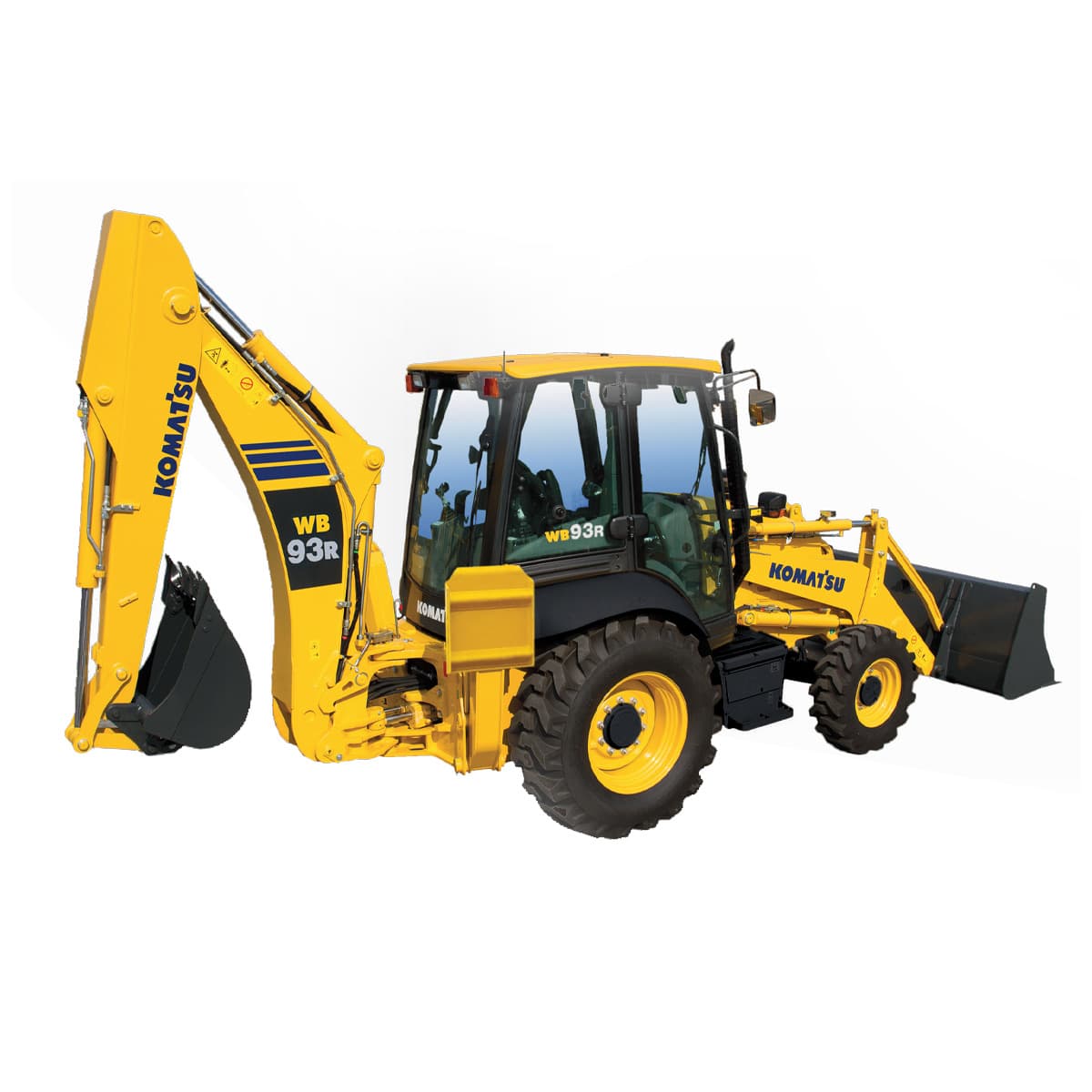 Komatsu WB93R-5E0 Backhoe Loader
Digs in the back, loads in the front: two machines in one rental.
Get a quote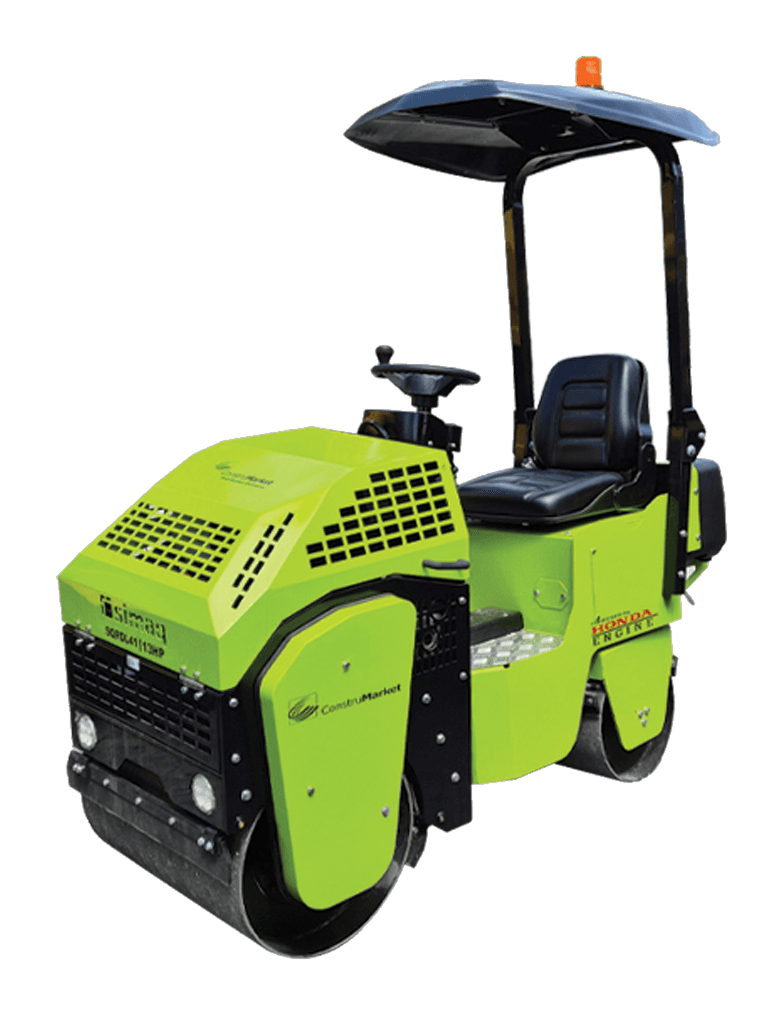 SIMAQ SQRD L51 Ride-On Roller (1.5 t)
Ride-on compaction for embankment and minor roadwork.
Get a quote